

















A Complete ‘Vehicle as a Service’ Bundle for your Fleet
Discover our new all inclusive electric vehicle rental bundle that you can offer to your drivers and electrify your fleet
What is ‘Mobilize Taxi Solutions’?
Mobilize Taxi Solutions, is a bundle offering that enables taxi fleets to easily access an end to end electric vehicle solution for their drivers and fleet. This Renault & Mobilize backed green air initiative, enables you to access both electric cars and wheelchair accessible vehicles which aligns with zero emission targets and enables fleets to access various streams of work.
What Vehicles are in the bundle?
Megane E-Tech 100% Electric
A new automotive era has begun. With all new Renault Megane E-Tech 100% electric, pure emotion and controlled technology combine for an innovative mobility experience.

Austral Hybrid SUV
Hybrid by nature, a spacious SUV with a sleek profile.
Up to 18 advanced driver assistance systems. Upto 620 miles driving range and upto 80% electric driving in town with upto 60.1 MPG.

Dacia Jogger Hybrid
This technology, which combines two electric motors and a combustion engine, meaning it doesn’t need to be plugged in. With Jogger HYBRID 140, everything is simple.

Arkana Hybrid SUV
Arkana blends sleek coupé lines with a sturdy SUV look. Sporty outside, Arkana retains its SUV roots with a high driving position, ample interior space with generous boot space.

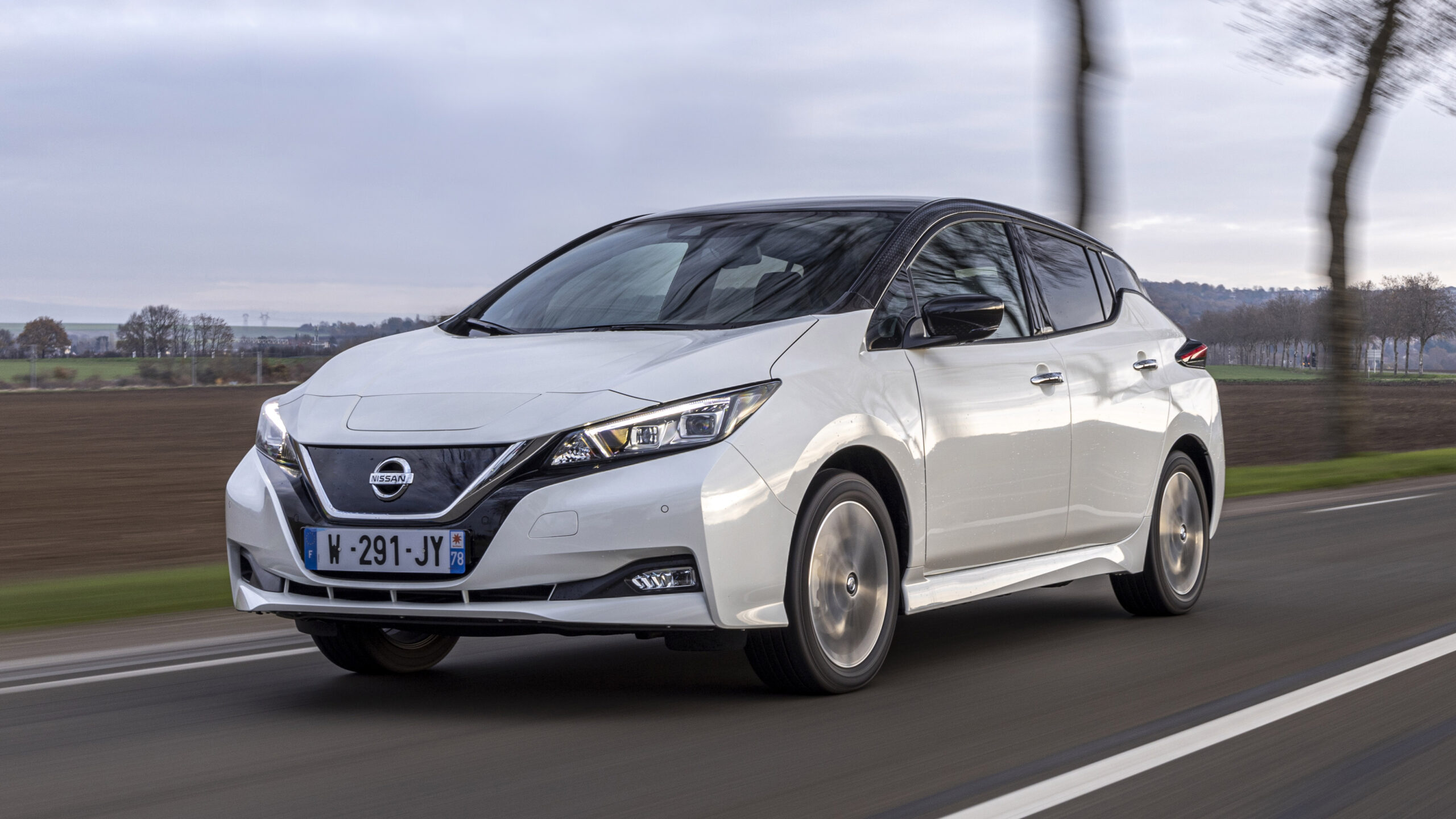
Nissan Leaf
The 100% electric Nissan LEAF is brimming with new possibilities to offer you multiple driving experiences with just one car. Comfortable and spacious with automatic drive and impressive horse power.
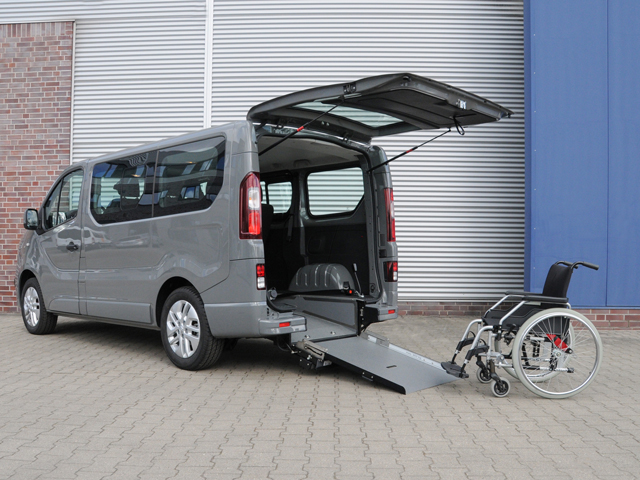
Dacia Jogger WAV
A 1.0 tcel litre petrol vehicle specifically adapted to allow Wheelchair access. The Dacia Jogger WAV does not compromise on space and comfort.

Renault Trafic
All new Renault Trafic Van E-Tech Electric is the first electric model of the best-selling Renault Trafic Van and completes the electrification of our LCV range joining the International Van of the Year award.
What is in the Bundle?
Car

Service

Tyres

Insurance

(Optional)
Fleet Management

Power

(Optional)
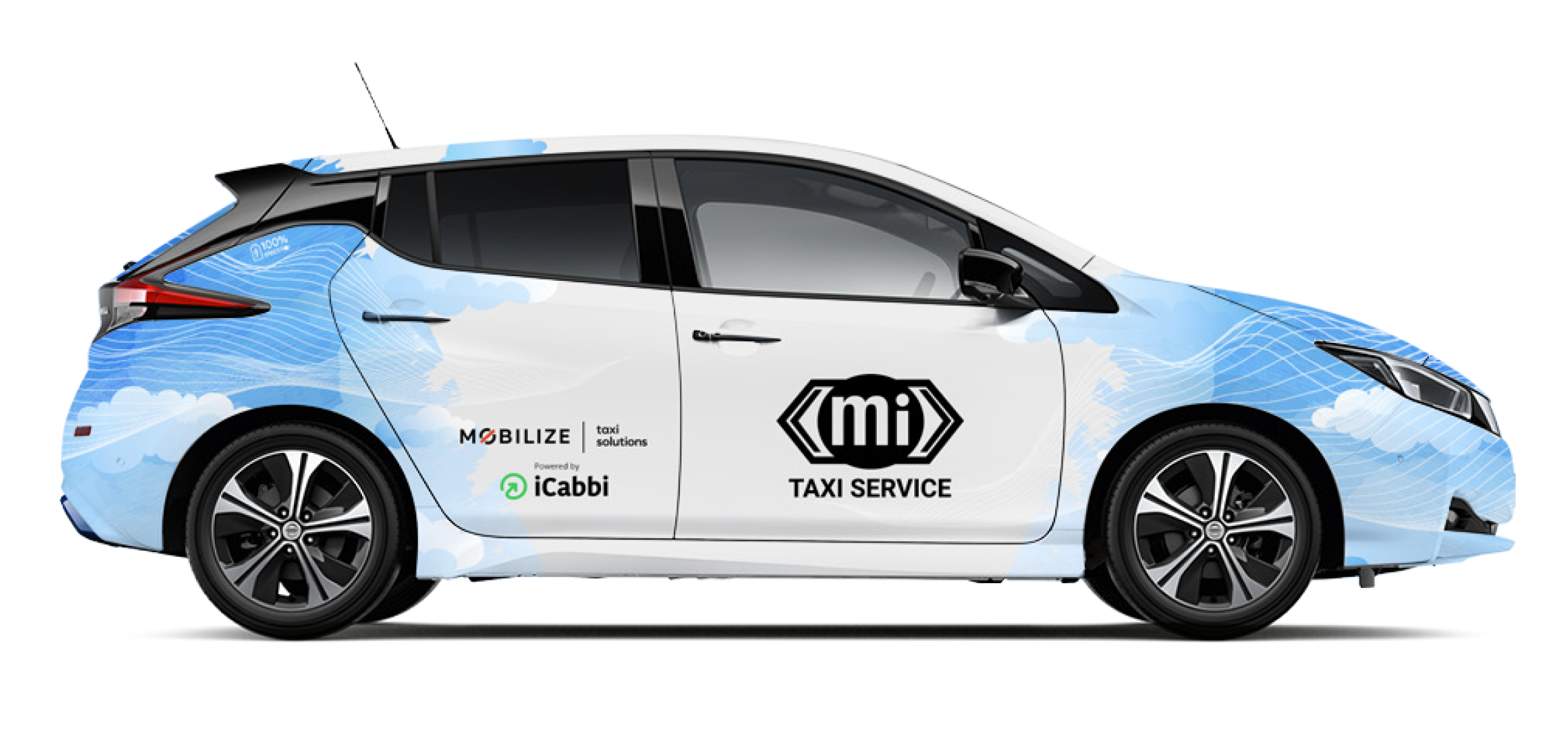

“I am thrilled to launch our latest initiative in conjunction with Mobilize Taxi Solutions and iCabbi to promote sustainable transportation by launching our new electric vehicles into our fleet. We are excited about this new initiative and look forward to serving our customers with the same level of quality service while reducing our carbon footprint.”
Jon Igoe
Mi Taxi Service, Nuneaton, UK
Benefits to Fleets and Drivers
Financing
No on-site garage cost
Insurance (optional)
No ULEZ charges
Taxi Alliance Incentive
No fleet depreciation concerns
Maintenance
Tyres
Warranty
Fleet Management
Replacement at the end of term
No balloon payment
Infrastructure mgmt. for fleet operators (e.g. charging stations)
Charging solutions for drivers (e.g. routing to charging stations, payment, etc.)
Home Chargers
FAQs
iCabbi has a new bundle service including an electric car and services aimed at taxi fleets and drivers.
At the moment we offer the Nissan Leaf as it is a well-adapted car for the taxi business. There will be other electric vehicle models available in the near future.
The bundle is a fixed monthly which includes car rental, maintenance, tyre replacement, fleet management and optional extras of insurance and power solutions. Submit your interest below and our sales team will discuss the bundle in more detail.
As part of the Mobilize Taxi Solutions offering, we have a dedicated power solutions team (Mobilize Power Solution) who will access each driver and fleets requirements to present a solution fit for purpose.
We have formulated a relationship with one of the leading insurance brokers in the UK. If you want to avail of this offering all we need is a few details of your current insurance and we obtain a market leading offer.
The Service, Maintenance and Types is handled by our approved servicing partner Kwikfit, who have 110 garages throughout the UK.
The iCabbi Driver App is available on iOS and Android smartphones and tablets. It is fully compatible with Apple CarPlay and Android Auto, enabling drivers to use the app hands-free via their vehicle’s dashboard display. The app also supports MDM (Mobile Device Management) solutions, making it suitable for fleets that provision and manage devices centrally.
Yes. The iCabbi Driver App can be configured as an NFC payment terminal, allowing drivers to accept contactless card payments directly through their device — without requiring separate card reader hardware. This keeps the payment journey fully within the iCabbi ecosystem and removes the need for third-party POS integrations. Note in the US and Canada, we use the driver companion to enable many other options.
The Earnings Dashboard gives drivers a real-time view of their completed trips, total earnings, and — uniquely — earnings missed by declining or missing available jobs. This transparency helps drivers optimise their working patterns and gives fleets a tool to communicate earning potential during driver recruitment. The dashboard is accessible within the app and updates automatically after each completed trip.
Yes. iCabbi’s Driver App permissions are fully configurable by fleet administrators. You can restrict or grant access to specific job types, account work, vehicle categories, and zones on a per-driver or per-group basis. This makes it straightforward to manage mixed fleets where some drivers are restricted to specific services or geographic areas.
Take Me There allows drivers to specify a destination and only receive trip offers that are heading towards that location. This is particularly useful for drivers ending a shift, positioning towards a high-demand zone, or heading home — ensuring they never take a trip that takes them further away from where they need to be.
The iCabbi Driver App includes a built-in panic button that can be triggered in-app or via hardware integration, sending an alert to the fleet control centre. A Driver Fatigue feature provides automatic reminders and enforced break periods to comply with working time regulations. Passenger communication uses direct-connect calling that masks phone numbers, protecting driver privacy.
Yes. Both the iOS and Android versions of the iCabbi Driver App include integrated Google turn-by-turn navigation, with passenger live location data fed directly from Google Fleet Engine. Drivers see their passenger’s precise real-time location on the map — eliminating the need for destination confirmation calls and reducing wasted time at pickups.
When a new version of the iCabbi Driver App is available, drivers receive an in-app notification prompting them to update through the App Store or Google Play. Fleet administrators can monitor app version adoption across the fleet via the management console, making it straightforward to ensure all drivers are on the latest version. iCabbi’s Driver App also utilises Mobile Device Management (MDM) to push updates and alerts.
iCabbi operates on a per-driver SaaS model, with pricing that scales with the size of your operation. Pricing is structured to grow with you, You pay a license fee per driver on a rolling monthly basis in a pay as you go model. Market specifications do apply. Contact iCabbi for a tailored quote based on your fleet size, markets, and required products.
Yes. Driver Docs is part of the core iCabbi platform and is available to all iCabbi customers at no additional cost. It is currently live for UK and Ireland customers,
Driver Docs includes an automated vehicle checker that verifies registration details directly with the relevant national body (such as the DVLA in the UK). Licence and badge verification is built into the document upload workflow, reducing the manual checks your back-office team would otherwise need to perform. All verification records are stored within the system with timestamps for audit purposes.
Yes. Driver Docs is designed as a self-service tool. New drivers can upload their required documents — licence, proof of address, badge ID, and any custom documents your fleet requires — directly through the portal, without visiting the taxi base. Fleet administrators review and approve submissions from the management console, with automated reminders sent to drivers who haven’t completed required steps.
Driver Docs sends automated reminders to both drivers and fleet managers when documents are approaching their expiry date. The cadence and lead time of reminders is configurable. Expired documents trigger a status flag in the driver record, giving fleet administrators a real-time view of compliance across the entire driver base — making licence and insurance renewal management proactive rather than reactive.
Yes. Beyond standard document templates (licence, proof of address, badge ID), Driver Docs allows fleet administrators to create entirely custom document types with configurable names, expiry rules, and mandatory/optional status. This makes it straightforward to capture fleet-specific requirements such as medical certificates, local council permits, or company policy acknowledgements.
Driver Docs integrates with iCabbi Dispatch, ensuring that all driver record updates made through the portal are automatically reflected in the operational system. Integration with third-party HR and document management platforms is available via the iCabbi API. Contact your Customer Experience Manager to discuss specific integration requirements.
Driver Docs stores all documentation within iCabbi’s encrypted, cloud-based infrastructure. Access is controlled via configurable admin roles — fleet managers can define which team members can view, edit, or approve specific document types. Two-factor authentication is available for additional account security. Data handling complies with GDPR requirements for UK and EU customers.
Instant payouts are triggered on request from the driver. Funds are typically available within minutes, subject to standard card network processing times. This is designed for part-time drivers or those who need immediate access to earnings after a shift, without waiting for a weekly settlement cycle.
Driver Pay fee structures are set by the fleet operator. Contact your fleet manager or iCabbi for details on how Driver Pay is configured for your specific operation. iCabbi’s model is designed to make fast payout accessible without creating a punitive cost barrier for drivers.
Driver Pay handles settlements for card transactions processed through the iCabbi platform, including contactless, chip and PIN, Apple Pay, and Google Pay transactions made through the Passenger App or Driver App NFC terminal. All card work processed through iCabbi is eligible for Driver Pay, regardless of the payment method used by the passenger.
Driver Pay operates through iCabbi’s centralised payment dashboard, which provides fleet managers with a full audit trail of all driver earnings, payouts, and settlement records. This data can be exported for integration with payroll and accounting software. Because Driver Pay is native to the iCabbi platform, there is no need to share financial data with additional third-party providers.
Yes. iCabbi Driver Pay supports both models simultaneously — fleet operators can choose to enable Scheduled Payouts (daily or weekly), Instant Payouts, or both, allowing different drivers to opt for the model that suits their working pattern. Full-time drivers may prefer scheduled weekly payments, while part-time or gig-style drivers often prefer instant access after each job.
Driver Pay is currently available for iCabbi customers in the UK and Ireland, with expansion to additional markets planned. Contact your iCabbi Customer Experience Manager for the latest availability and market-specific configuration options.
Drivers can view their full payout history, earnings breakdown, and payment status directly within the iCabbi Driver App. The Earnings Dashboard displays completed trips, associated payments, and payout dates in one place — giving drivers full transparency over their finances without needing to contact the fleet office.
iCabbi Voice is built on a cloud-based PBX architecture that integrates with internet based SIP trunking. This means you can retain your existing phone numbers so long as the telephony is being provided by a SIP provider that provides their services via remote IPs (Instead of traditional physical phone lines/broadband cabling)
The iCabbi Voice system automates a significant proportion of routine inbound and outbound calls. This includes:
-ASAP & Pre Bookings
-Booking status queries
-Option to speak with their driver
-Option to make a cancellation
-Ringback
-Late booking callouts
-No show warning calls
-Automated callback
The exact automation rate depends on how your Voice system is configured and what features are enabled, but most fleets see material reductions in live operator call volume within the first month of operation.
Yes. iCabbi Voice includes automated outbound calling capabilities including late booking call-outs (alerting passengers when their taxi is running late), no-show approval calls (confirming a passenger still requires their booking), queue callback options when wait times are longer than usual to be answered by an agent, and automated callback for when a caller hangs up before being answered to bring that caller back. These reduce inbound call volumes by proactively resolving passenger concerns before they call in.
iCabbi Voice runs on AWS cloud infrastructure, benefiting from the same 99.999% uptime SLA as the wider iCabbi platform. Because it is cloud-based rather than on-premise, there is no single hardware point of failure.
No. This is a feature as part of the Voice Ai product.
Yes. Within the Voice system, you’re able to configure webhooks that will allow the system to send an sms message to the caller in the event of them hanging up before being answered by an agent. The message can direct them to the passenger app, offer a promo code. Turning a lost call into a recovered booking opportunity.
Yes. iCabbi Voice allows you to configure the system to offer different language options at the start of each call. This is particularly relevant for fleets operating in bilingual markets or serving international passenger bases. Ensuring no customer is disadvantaged by language barriers.
Yes. Voice AI can be configured with operational schedules, allowing it to handle calls automatically during defined hours while routing to live operators at other times. You can set different behaviours for weekdays, weekends, and public holidays — for example, running full AI automation overnight and routing daytime calls to operators for complex bookings.
Yes. Voice AI can authenticate account callers by phone number or account ID, retrieve their account profile, apply corporate pricing and cost centre rules, and complete an account booking without human involvement. For callers with multiple accounts or complex booking rules, Voice AI confirms the relevant details before processing the booking.
General-purpose voice AI platforms require extensive custom development to handle taxi-specific workflows — address lookup, zone pricing, vehicle selection, account authentication, and dispatch integration. iCabbi Voice AI is purpose-built for taxi and private hire, trained on millions of real booking calls, and natively integrated with iCabbi Dispatch from day one. There is no custom development required, and the system is operational within 3-4 weeks.
Yes. Voice AI processes and stores call data in accordance with GDPR requirements. Call recordings are handled under iCabbi’s data processing agreements, with configurable retention periods and access controls. Passenger data collected during booking calls is used only for booking fulfilment and service improvement, and is never shared with third parties for marketing purposes.
iCabbi Voice AI is currently optimised for English across multiple accents and dialects. Multilingual support is in active development — contact iCabbi for the latest language availability and roadmap. The platform’s NLP engine is designed to be language-extensible, meaning additional languages can be added without rebuilding the core system.
iCabbi Business Solutions supports allocation of trip costs to multiple cost centres, departments, or budget codes within a single corporate account. Monthly invoices are consolidated and can be exported in formats compatible with major accounting platforms. For complex organisations, department admins can manage their own travel budgets independently while finance retains centralised oversight.
Yes. Travel Rules allow account administrators to configure restrictions on booking times, trip distance, allowable destinations, and capped fare limits for individual users or departments. You can also enable trip validation — requiring manager approval for bookings that fall outside policy parameters. This gives finance and compliance teams control over taxi spend without manual review of every booking.
Employees can book via the iCabbi Passenger App (switching to their business account with a single tap), a web portal, or through an admin booker who books on their behalf. The booking experience is identical to a standard consumer booking — with the addition of cost centre selection and any travel policy validation steps configured by the account administrator.
Yes. The Admin Booker feature allows designated account administrators to make bookings on behalf of any employee or guest — without the individual needing their own iCabbi account. This is particularly useful for reception teams managing visitor travel, event coordinators handling delegate transfers, or PAs booking for senior staff.
Business Solutions includes a centralised expense reporting dashboard and automated monthly reports covering all bookings, spend by department, user activity, and booking policy compliance. Reports can be scheduled for delivery to finance or office management teams, eliminating the manual process of chasing taxi receipts from employees.
iCabbi Business Solutions is available to any fleet running the iCabbi platform — there is no separate minimum fleet size requirement. The product scales from single-branch businesses to multi-site national organisations. Contact iCabbi for enterprise pricing and configuration options for larger corporate account programmes.
The Passenger App supports credit and debit card payments, Apple Pay, Google Pay, and cash (where the fleet enables cash booking). Account users can switch between personal card payment and business account billing within the same app session. Secure payment processing means no card details are stored on the device.
iCabbi data shows that app users take 2.2 times as many trips per year as passengers who book by phone. For fleets, this means converting phone customers to app users directly increases booking frequency and driver earnings — without increasing marketing spend. Fleets running active app promotion campaigns typically see measurable shifts in booking channel mix within 90 days.
Yes. The iCabbi Exchange App Roaming feature means passengers can use the iCabbi-powered app across 200+ locations in the UK and Europe, even if their home fleet doesn’t operate there. This is a significant advantage over proprietary single-fleet apps, as it increases the app’s utility for frequent travellers. It keeps passengers using your app when they are out of your local area, making it less likely they will download and use a ridehail app and continue doing this when they return home.
Yes. The iCabbi Passenger App supports unified login for personal and business accounts. Passengers can switch between their personal payment method and a corporate account within the same app — including department cost allocation and automated expense reporting for business trips. This makes iCabbi suitable for corporate travel programmes alongside consumer bookings.
Yes. Move AI includes real-time GPS tracking and electronic trip logs that capture time stamped pickup and drop-off confirmations with location data. This supports EVV (Electronic Visit Verification) and Medicaid billing audit requirements, helping transportation providers demonstrate trip completion to brokers and managed care organisations. The built-in fraud detection tools also flag route deviations and suspicious patterns proactively.
Move AI’s real-time optimisation and automated dispatching are specifically designed to improve on-time performance (OTP), which directly affects HEDIS transportation metrics and CAHPS satisfaction scores. By reducing no-shows through automated passenger notifications, minimising late cancellations, and maintaining 94%+ on-time rates, providers using Move AI consistently perform as top-ranked vendors with their broker partners — often receiving increased trip volume as a result.
Move AI differs from other NEMT route optimization platforms in how it performs at scale. The technology that powers Move AI is the same foundation used in leading rideshare environments, designed to handle both planned and on-demand trips at high volume. In contrast, many NEMT routing platforms often break as operations grow more complex or volume increases.
It’s widely known in the industry that once operations exceed 300–500 trips per day, systems can slow down, become unresponsive, or require manual intervention to maintain service. Move AI is built to operate in these conditions, continuously adjusting to changes and maintaining performance without forcing teams back into manual workflows.
Move AI typically reduces total NEMT operating costs by 10–25%, with most high-volume operations seeing $10,000–$30,000 in monthly savings and $500K–$1M+ annually at scale. These results are most relevant for brokers and providers managing hundreds to thousands of trips per day, where optimization and automation have the greatest impact.
These savings come from:
- Reduced manual routing and dispatch time
- Lower deadhead miles
- Fewer cancellations, turnbacks, and uncovered trips
- Better utilization of vehicles and top-performing providers
- For large broker networks, even small efficiency gains (1–3%) can translate into millions in savings due to the scale of their operations.
Move AI is built with open API integration to connect across the NEMT ecosystem from direct broker platforms like Modivcare, MTM, to managed care organisations, and scheduling systems. This allows automated trip ingestion, status updates, and reporting without manual data entry. Contact iCabbi for details on specific integration partnerships currently available.
Move AI’s multi-modal driver functionality allows the same driver and vehicle to switch between NEMT, school transportation, and other trip types within a single manifest. The system applies the correct service rules, compliance requirements, and billing parameters for each trip type automatically, making it practical for operators running mixed-service fleets. It also handles the complexity within those trip types using 200+ parameters to account for a wide range of member and operational needs.
Move AI reduces turnbacks and rescue provider costs by pre-building operationally realistic routes and automatically reassigning trips in seconds when disruptions occur. Instead of relying on expensive “rescue providers,” the system fills gaps with existing fleet capacity first. This proactive response typically cuts last-minute provider usage by 5–10%.
Move AI handles same-day changes by continuously re-optimizing the provider network in real time. When a cancellation or delay happens, the system instantly reshuffles assignments by evaluating providers (including cost and contract agreements), vehicles, and routes. This replaces reactive “firefighting” with automated adjustments–stabilizing the day without heavy dispatcher intervention or reliance on rescue providers.
Move AI improves provider utilization by linking individual trips into complete, efficient multi-load routes instead of assigning fragmented single trips. As a result, providers who typically handle ~100 trips per day can often handle 120–150 without adding vehicles, unlocking 20–30% more capacity across the network. This allows brokers to move more volume through existing providers, prioritize top performers, and reduce reliance on underperforming or high-cost providers.
No, Move AI does not replace dispatchers; it elevates their work as strategic care coordinators. By automating 90% of mundane routing tasks, dispatchers can focus on high-value work like exception management and provider relations. This “human-in-the-loop” approach boosts efficiency while keeping the empathy required for vulnerable populations.
Move AI adapts to complex NEMT operations by using 200+ parameters to account for a wide range of constraints, including service rules, provider agreements, timing requirements, and member needs. This allows the system to make flexible, context-aware decisions across different trip types and operating models. Over time, it also improves accuracy by learning patterns such as typical facility wait times, helping refine scheduling and reduce delays.
The best NEMT routing optimzation software for large operations is one that can handle high trip volumes, frequent same-day changes, and multiple providers without breaking or requiring constant manual intervention. Most systems rely on static routing, which works for smaller, predictable fleets but struggles as complexity increases. Once you get above 300-500 trips per day, most optimization platforms slow down, are unresponsive, or don’t work and thus force operations teams back to manual intervention.
Move AI is designed for large-scale operations by continuously re-evaluating the entire network in real time, adapting to live traffic, provider availability, and trip changes as they happen. It is also tested and configured within your actual operational workflow—not a one-size-fits-all demo environment—so the results reflect real-world conditions. This allows high-volume operations to stay stable, coordinated, and scalable as complexity increases.
One way brokers can reduce NEMT operational costs without impacting quality is by using route optimization to improve multi-loading and reduce manual intervention. Move AI does this by automatically sharing optimized route bundles across the provider network and continuously adjusting them when trip changes occur. This typically reduces total transportation costs by 5–15% while maintaining member satisfaction, minimizing empty miles, and meeting on-time performance (OTP) targets.
Brokers can reduce reliance on rescue providers by automatically reassigning trips within their network as soon as turnbacks occur. Instead of manually searching for coverage or defaulting to high-cost rescue rates, trips are immediately matched to the most suitable and available provider. Move AI enables this by continuously reshuffling assignments across the network in real time, helping maintain trip coverage with lower-cost providers and avoid premium recovery fees.
Improving on-time performance (OTP) requires building routes based on real-time traffic and actual road conditions rather than static averages. When routing accounts for these variables, it reduces unnecessary padding that leads to delays and long wait times. Move AI helps operators consistently achieve 94%+ OTP by using highly accurate ETAs powered by Google Fleet Engine, often within one minute of arrival time. It also learns typical wait times at specific facilities and adjusts return trip timing accordingly, reducing member wait times on the return leg.
Move AI improves response times for will calls by using historical patterns and real-time data to anticipate when members will be ready for pickup. Instead of relying on guesswork, the system learns typical wait times at specific facilities and for recurring appointments—such as dialysis—allowing trips to be scheduled more accurately in advance. This helps fleets and brokers respond faster, reduce delays, and minimize member wait times after care appointments.
An NEMT fleet can increase trip volume by eliminating deadhead miles and maximizing driver utilitization throughout the day. Move AI helps drivers complete 20–30% more rides per day with optimized routes that reduce idle time between trips. This enables providers to scale significantly without the expense of new vehicles or the operational strain of labor shortages.
Automation improves NEMT operational margins by reducing the number of manual touchpoints required to manage trips effectively. Move AI protects these margins by automating up to 70% of the manual routing workload, allowing organizations to scale their business without increasing administrative costs. By handling the complex math of orchestration, the platform allows existing teams to focus on high-touch care while the software alleviates the logistical challenges of daily operations.
Multi-loading in medical transportation is the strategic practice of grouping multiple passengers in one vehicle to reduce costs and increase fleet capacity. To remain compliant, this process must balance efficiency with strict passenger compatibility and ride-time protocols. Move AI automates this by applying configurable constraints—such as wait windows and mobility requirements—to ensure shared trips are operationally efficient without increasing member dissatisfaction or violating Medicaid guidelines.
Key Benefits of Automated Multi-Loading:
- Reduced Ride Times: Limits are set mathematically so no patient exceeds their maximum allowable time in the vehicle.
- Patient Compatibility: Software automatically prevents pairing incompatible riders.
- Cost Efficiency: Maximizing vehicle seats reduces deadhead miles and lowers the cost-per-trip by 15–25%.
- Operational Outcome: Move AI increases shared rides while maintaining high service quality, turning a complex manual task into a reliable, automated outcome.
Using Move AI, organizations realize a full return on investment (ROI) within 3–6 months, often seeing annual savings between $500K and $1M+ at scale. These financial gains are driven by a combination of:
- Reduced manual labor
- Lower cost per trip
- Fewer cancellations and turnbacks
- Better provider utilization
All of which compound as trip volume increases.
iCabbi Dispatch uses a configurable rule-based engine to allocate jobs based on proximity, real-time ETA, driver availability, vehicle type, zone rules, and shift constraints. You can configure dispatch to prioritise speed, fairness, earnings equity, or zone coverage and switch between rules at any time, including via scheduled profiles for predictable peak periods.
iCabbi includes built-in Overbooking Protection that monitors your driver availability in real time. If capacity falls below a configurable threshold, the system can automatically hold new bookings, redirect them to partner fleets via the Dispatch Networking feature, or alert your dispatch team. The Networking tool lets you share overflow work with trusted local operators who you select to partner with, turning a potential service failure into a covered booking.
Yes. Using the Sites feature, you can run separate fleets within a single iCabbi account — for example, a standard taxi service, an executive offering, and a wheelchair-accessible fleet — each with its own dispatch rules, branding, and driver pool. Work can be shared across sites during busy periods while maintaining service separation day-to-day. Bureauing is the next level up. It allows for multifleet management by connecting each fleets’ iCabbi instance together. These makes growth by acquisition or merger quick and easy to manage.
iCabbi’s Data Suite provides over 290 reporting parameters covering trip volumes, driver performance, booking channel breakdown, revenue by zone, cancellation rates, average response times, and more. Reports are fully customisable and can be scheduled for automated delivery — giving fleet managers the operational insight they need without manual data extraction.
iCabbi Dispatch offers over 1,000 real-time configuration options — more than any other taxi dispatch platform on the market. This covers everything from dispatch priority rules and surge pricing to driver incentives, zone profiles, and booking channel behaviour. Changes take effect immediately without requiring system restarts or developer involvement.
Standard dispatch simply assigns the nearest available driver by distance. This will not always be the fastest driver to pick-up, however. Dispatch by ETA goes further — it uses real-time, traffic-aware data from Google Fleet Engine to calculate the actual fastest driver to the pickup point, accounting for road conditions, traffic, and current driver direction of travel. The result is consistently faster pickups and fewer late arrivals.
The iCabbi platform is available in English, French, Finnish, Swedish, and additional languages upon request. Localisation extends to the Driver App and passenger-facing products, making iCabbi suitable for multilingual markets and international fleet operators.
Yes. iCabbi provides a dedicated implementation and migration team who manage your transition from your existing platform. Historical booking data, driver records, and account configurations can be migrated, and iCabbi runs parallel testing before go-live to ensure zero service disruption.
AI is embedded throughout the iCabbi platform. The dispatch engine uses Google Fleet Engine for real-time, traffic-aware job allocation — going well beyond traditional rule-based dispatching.Voice AI uses natural language processing to automate inbound and outbound calls with human-level accuracy.
The Exchange is iCabbi’s inter-fleet network. It comprises two types of networking. The app network allows fleets to offer roaming to their passengers on their app. By connecting up all of the iCabbi fleets, passengers of any local app that participates can use that app to book with another iCabbi customer be that regionally, nationally or internationally. Dispatch networking allows operators to send overflow bookings they cannot service to other iCabbi fleets directly on Dispatch, and to accept inbound bookings from partner fleets during quieter periods. Both app networking and dispatch networking reduces passenger loss to ridehail platforms and creates a new revenue stream for participating operators.
iCabbi currently operates in Australia, Belgium, Canada, Denmark, Finland, Iceland, Ireland, Netherlands, New Zealand, Portugal, Spain, Sweden, United Kingdom and United States.
iCabbi customers are assigned a Relationship or Customer Experience Manager who provides proactive onboarding support, product training, and ongoing guidance as the platform evolves. Support is available 24/7 for operational issues, with a 99.999% uptime SLA underpinning the commitment.
iCabbi can be used by fleets of varying sizes. From micro to mega there is an application of the iCabbi product for you. The complete iCabbi taxi platform is an intelligent enterprise-grade solution chosen by some of the world’s largest taxi fleets with vehicles in the 10,000s+. The system is designed to help taxi fleets scale, whether you use a ready to go version of the core dispatch and driver app set, or avail of advanced feature sets, upgrades and add on products, you will find an application of iCabbi that meets your needs and wants now and grows with you. To note, in the UK, iCabbi’s reseller ETGL looks after fleets under 50 vehicles and a typical fleet in the USA and Canada starts from 25 vehicles.
iCabbi is the only taxi dispatch platform powered by Google Fleet Engine, delivering real-time, traffic-aware dispatch precision not available on any other system. Combined with a 99.999% uptime guarantee, a 98% customer retention rate, and the only custom-built for taxi payments solution in the sector, iCabbi consistently outperforms alternatives on reliability, innovation, and long-term scalability. iCabbi continuously invests in and researches new tech available to ensure we are delivering innovation at pace.
iCabbi operates on a per-driver SaaS model, with pricing that scales with the size of your operation. Pricing is structured to grow with you, You pay a license fee per driver on a rolling monthly basis in a pay as you go model. Market specifications do apply. Contracts can vary from no lock-in contracts to fixed 12 month or other terms, depending on market specifications. Contact iCabbi for a tailored quote based on your fleet size, markets, and required products.
Yes. iCabbi Dispatch natively supports multi-stop bookings, recurring bookings, advance bookings up to 7 days ahead, and account-based bookings with custom billing rules. The engine handles all of these alongside on-demand jobs within the same dispatch queue, prioritising and allocating each appropriately.
iCabbi Dispatch is cloud-based and requires internet connectivity to assign new jobs. However, the Driver App includes offline capability — drivers can complete in-progress trips and navigate without connectivity, with all data syncing automatically when the connection is restored. For dispatch offices, iCabbi recommends a 4G failover connection to ensure continuous operations.
Zone profiling lets you divide your operating area into distinct geographic zones, each with its own dispatch rules, pricing and reporting. You can schedule different zone profiles by time of day — for example, activating a stadium zone profile during an event — or trigger them manually. This gives operators granular control over driver distribution and fare management without manual intervention.
The app includes automated driver tracking and push notification alerts that keep passengers informed as their taxi approaches. Passengers can see their driver’s live location and ETA, reducing confusion and last-minute cancellations. Fleets can also configure no-show and cancellation fees within the app, ensuring drivers are compensated when a passenger fails to appear. This reduces the likelihood of a passenger booking with multiple apps simultaneously and cancelling the booking at the last minute if they are reached by another driver first. Passenger to driver chat is also available.
Yes. The app includes accessibility options including Voice Commands, Text to Speech, adjustable font size, high colour contrast mode, and dark mode. Passengers with visual or motor impairments can configure the app to suit their needs. Vehicle selection also includes accessible and wheelchair-friendly vehicle categories where available in your fleet. The Passenger App is Web Content Accessibility Guidelines (WCAG) compliant and is in line with European guidelines.
Yes. The iCabbi Passenger App is fully white-labelled — your fleet’s name, logo, and brand colours are applied throughout the app. Passengers download an app that represents your business, not iCabbi. This maintains your local brand identity and prevents customer dilution to generic booking platforms. Your app will be downloaded by your customers directly from your fleet’s app store and not iCabbi’s.
The iCabbi Passenger App is white-labelled under your local taxi fleet’s brand — passengers build loyalty with their local operator rather than a global platform. Features are on par with ridehail apps: real-time driver tracking, fare estimates, in-app payment including native wallet integrations (Google Pay and Apple Pay), tipping, and push notifications. The key difference is that every booking stays within your fleet, protecting your revenue and customer relationships rather than feeding them to a competitor.
The business solutions admins have access to Track My Taxi portal feature gives account administrators a live tracking link for any active booking — allowing HR, security, or facilities teams to monitor employee travel in real time when required. This supports duty of care frameworks for night-time travel, lone worker policies, and business travel risk management.
Want to know more?
Register your interest today and we’ll contact you with more information